It seems that traders no longer believe Trump and his threats and are not afraid of a new round of conflict in the Middle East, as evidenced by the fact that the euro and pound rose yesterday, ignoring the attacks between the US and Iran.
Most likely, the main signal for growth was the minutes from the last Federal Reserve meeting. Although it removed references to possible further easing of policy, the decision to keep the rate in the range of 3.50–3.75% was unanimously supported— all twelve voting members voted in favor of a pause. Additionally, several officials noted that there are already arguments in favor of a rate hike, although they supported a wait-and-see approach this time.
Inflation remains above the target of 2%, and the committee links this to tariffs, high energy costs, tensions in the Middle East, including the potential closure of the Strait of Hormuz, as well as increased demand due to substantial investments in artificial intelligence.
Today promises to be eventful for financial markets, especially in Europe. In the first half of the day, traders' attention will be focused on the publication of Germany's trade balance data. This indicator is key for assessing the state of the largest economy in the Eurozone and can significantly impact the euro's exchange rate. A positive trade balance, if confirmed, is expected to strengthen the European currency.
Alongside the German data, the European Central Bank's report from the last monetary policy meeting will also be released. Recall that the central bank decided on another rate hike. This step, aimed at combating inflation, should, in theory, contribute to the euro's strengthening. Higher interest rates make investments in European assets more attractive to traders, potentially increasing demand for the euro.
An additional factor worth noting will be the Eurogroup meeting. Discussions on current economic challenges and coordination of policies among Eurozone member states could bring extra volatility to the markets.
As for the pound, there is no statistical data scheduled for the UK today. The absence of new information from London creates an information vacuum, prompting traders to rely on past trends and expectations. This could lead the pair to move within established patterns, supported by market inertia towards growth.
If the data aligns with economists' expectations, it is advisable to act based on the Mean Reversion strategy. If the data comes in significantly higher or lower than economists' expectations, it is best to use the Momentum strategy.
Buy on a breakout of 1.1429, which could lead to a rise in the euro to around 1.1457 and 1.1486;
Sell on a breakout of 1.1400, which could lead to a drop in the euro to around 1.1385 and 1.1365;
Buy on a breakout of 1.3406, which could lead to a rise in the pound to around 1.3432 and 1.3462;
Sell on a breakout of 1.3380, which could lead to a drop in the pound to around 1.3340 and 1.3320;
Buy on a breakout of 162.55, which could lead to a rise in the dollar to around 162.92 and 163.20;
Sell on a breakout of 162.35, which could result in dollar sell-offs down to around 162.05 and 161.80;
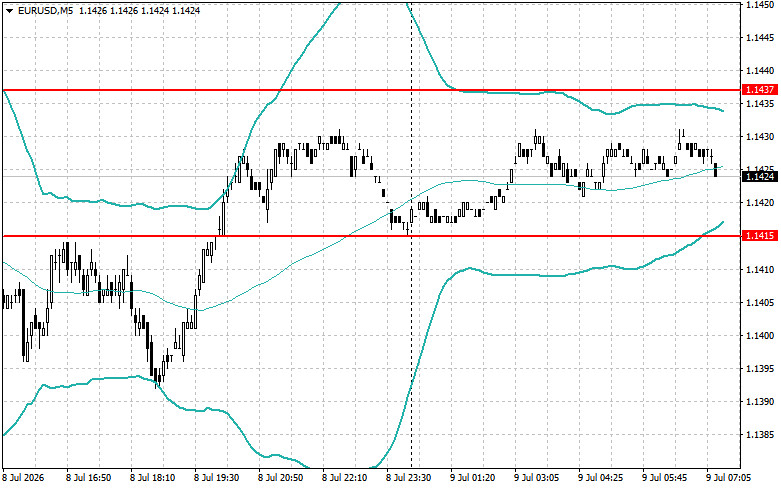
Look for short positions after an unsuccessful breakout beyond 1.1437, returning below this level;
Look for long positions after an unsuccessful breakout below 1.1415, returning to this level;
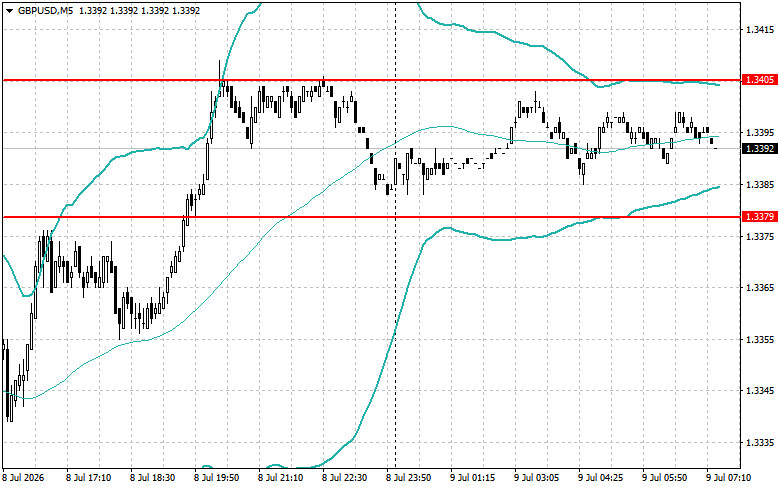
Look for shorts after an unsuccessful breakout below 1.3405, returning beneath this level;
Look for longs after an unsuccessful breakout below 1.3379, returning to this level;
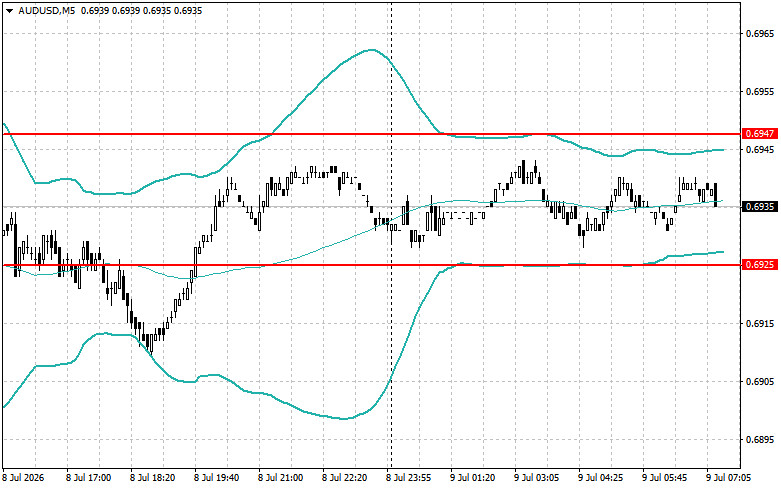
Look for shorts after an unsuccessful breakout below 0.6947, returning beneath this level;
Look for longs after an unsuccessful breakout below 0.6925, returning to this level;
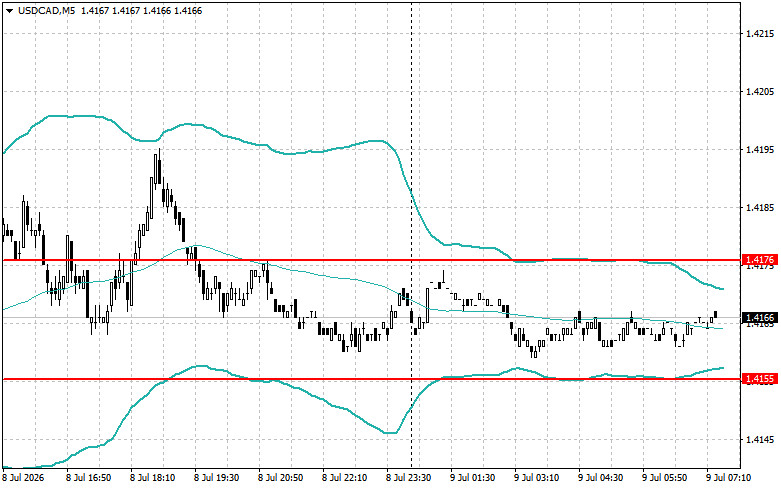
Look for shorts after an unsuccessful breakout below 1.4176, returning beneath this level;
Look for longs after an unsuccessful breakout below 1.4155, returning to this level;
ForexMart is authorized and regulated in various jurisdictions.
(Reg No.23071, IBC 2015) with a registered office at First Floor, SVG Teachers Co-operative Credit Union Limited Uptown Building, Corner of James and Middle Street, Kingstown, Saint Vincent and the Grenadines
Restricted Regions: the United States of America, North Korea, Sudan, Syria and some other regions.










 আমাদের সাথে যোগাযোগ করুন