
The EUR/USD pair is consolidating near its monthly high, preparing for further growth, and the potential for a correction remains limited against a favorable fundamental backdrop. Today, the U.S. dollar attempted a modest recovery from levels last seen at the end of October, but unsuccessfully. This attempted rebound became the key factor restraining the rise of EUR/USD.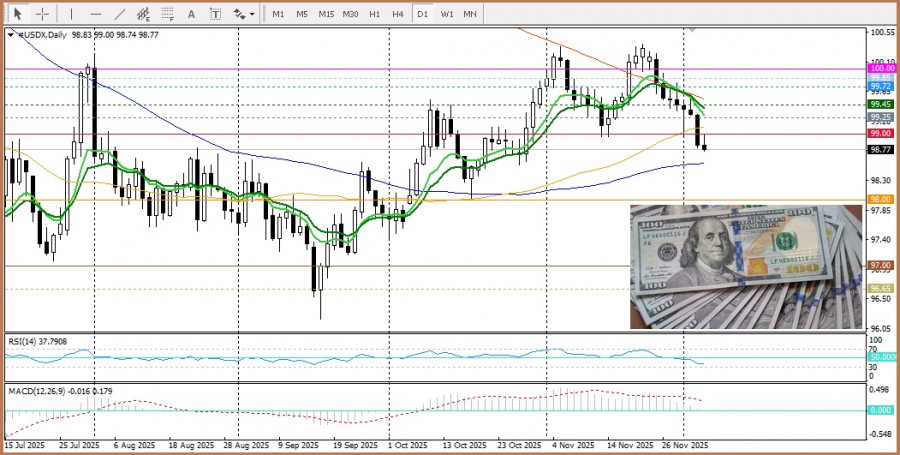
According to the latest U.S. macroeconomic data, the economy is gradually cooling, and combined with signs of a further slowdown in the U.S. labor market in November, this has strengthened expectations of a 25-basis-point rate cut at the upcoming FOMC meeting scheduled for next week. Meanwhile, expectations of a more moderate pace of rate cuts in the U.S. continue to support optimism in risk assets and may put pressure on the U.S. dollar as a safe-haven asset. At the same time, the euro continues to receive support due to the increasingly widespread recognition that the European Central Bank has completed its rate-cutting cycle. ECB President Christine Lagarde emphasized that inflation is likely to remain close to the 2% target in the coming months, confirming the likelihood of maintaining the current monetary policy stance.
Even from a technical standpoint, yesterday's break above the 100-day Simple Moving Average (SMA) was viewed as a key bullish signal for EUR/USD. This suggests that prices continue to move north along the path of least resistance, and any meaningful pullbacks may serve as good buying opportunities. Oscillators on the daily chart are positive, supporting the upbeat outlook. The pair's nearest target is the psychological level of 1.1700. A pullback may be limited by the 100-day SMA located around 1.1645.
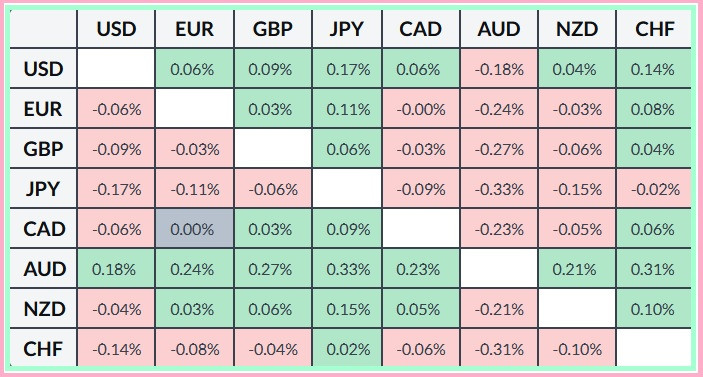
Below is a table showing the percentage change of the U.S. dollar relative to major currencies today. The dollar was strongest against the Japanese yen.

RYCHLÉ ODKAZY
ForexMart is authorized and regulated in various jurisdictions.
(Reg No.23071, IBC 2015) with a registered office at First Floor, SVG Teachers Co-operative Credit Union Limited Uptown Building, Corner of James and Middle Street, Kingstown, Saint Vincent and the Grenadines
Restricted Regions: the United States of America, North Korea, Sudan, Syria and some other regions.










 Kontaktujte nás