
Oil prices have sharply fallen below $100 per barrel following the agreement between the U.S. and Iran on a two-week ceasefire. This agreement, resulting from tense diplomatic negotiations, aims to halt the impending U.S.-Israeli military campaign. In return, Tehran is expected to resume open access to the Strait of Hormuz, which is of enormous significance for global energy markets.
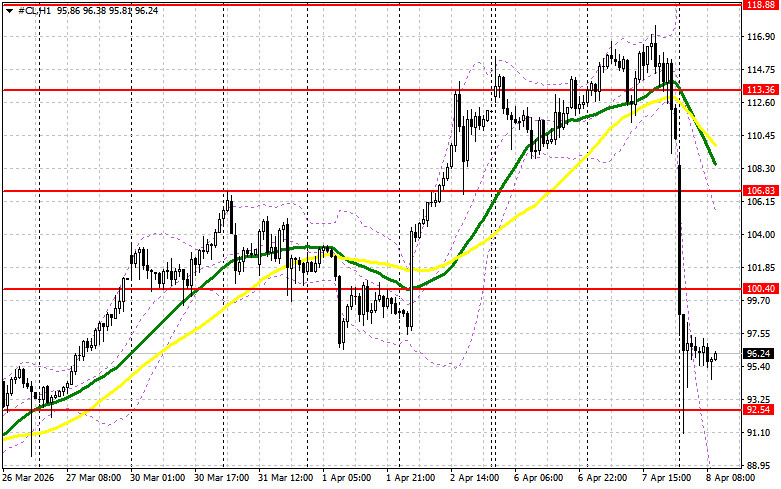
The consequences of this agreement were swift. Brent crude futures fell sharply, losing up to 16% and dropping to around $93 per barrel. West Texas Intermediate (WTI) crude also experienced significant declines, posting its most substantial drop in nearly six years, approaching $95 per barrel. These figures reflect a sharp reduction in the geopolitical premium previously built into crude oil prices.
President Donald Trump, commenting on the reached agreements, emphasized that the success of the ceasefire is directly linked to Iran's restoration of normal operations in the Strait of Hormuz. He noted that this condition is key to concluding and subsequently implementing the entire package of agreements. This statement highlights the importance of ensuring uninterrupted oil transportation and hints at the complex behind-the-scenes work that preceded this breakthrough.
The steep decline in oil prices could have far-reaching consequences for both exporting and importing economies. Lower prices may help slow inflation, but could also pressure the revenues of oil-producing countries.
"Iran has accepted Pakistan's proposal for a ceasefire, and safe passage through the strait is possible in coordination with the country's armed forces for two weeks," stated Foreign Minister Abbas Araghchi. Israel has also agreed to pause combat operations.
Pakistani Prime Minister Shehbaz Sharif also said that delegates from the U.S. and Iran have been invited to a meeting in Islamabad this Friday to continue negotiations on a potential final agreement.
However, as many economists point out, something truly monumental will be required for oil prices to drop back below $80 per barrel. It is clear that almost any failure in these ceasefire negotiations could quickly drive prices back above $100.
According to media reports, despite the potential reopening of the Strait of Hormuz, traders dealing with physical shipments remain cautious, waiting for clearer signs of a sustained truce before seeking shipments from the Persian Gulf. Meanwhile, shipowners have stated that they need to ensure safe passage for vessels from the region before sending tankers. Currently, over 800 ships have been blocked due to the U.S. attack on Iran.
Regarding the current technical picture of oil, buyers need to overcome the nearest resistance at $100.40. This will allow them to target $106.83, above which it will be quite challenging to break through. The furthest target will be $113.36. If oil prices fall, bears will attempt to take control at $92.54. If successful, breaking this range will deal a severe blow to the bulls' positions and push oil down to a low of $86.67, with the potential to reach $81.38.
ForexMart is authorized and regulated in various jurisdictions.
(Reg No.23071, IBC 2015) with a registered office at First Floor, SVG Teachers Co-operative Credit Union Limited Uptown Building, Corner of James and Middle Street, Kingstown, Saint Vincent and the Grenadines
Restricted Regions: the United States of America, North Korea, Sudan, Syria and some other regions.












 コンタクトする