Společnost Ford Motor Company zaznamenala ve druhém čtvrtletí výrazný nárůst prodejů díky marketingové kampani nazvané „From America, For America“.
V jejím rámci nabízela vybraným zákazníkům – především zaměstnancům a jejich blízkým – slevy na modely z let 2024 a 2025. Tato akce zafungovala a přinesla znatelné výsledky. Prodej lehkých vozidel Ford ve Spojených státech vzrostl o 14 % oproti stejnému období loňského roku. To je téměř desetinásobek oproti průměrnému 1,4% růstu celého automobilového odvětví v USA.
Navíc Fordu (F) vzrostl tržní podíl o 1,8 procentního bodu, což podtrhuje úspěšnost celé kampaně. „Naším prodejem ve druhém čtvrtletí jsme doslova smetli celý průmysl,“ uvedl Andrew Frick, prezident divizí Ford Blue a Model e.
Zaměstnanecké slevy tedy přilákaly nové zákazníky a posílily pozici značky na domácím trhu. Přestože tato konkrétní pobídka skončila, Ford plánuje další kroky, které mají zabránit poklesu zájmu v důsledku externích tlaků.
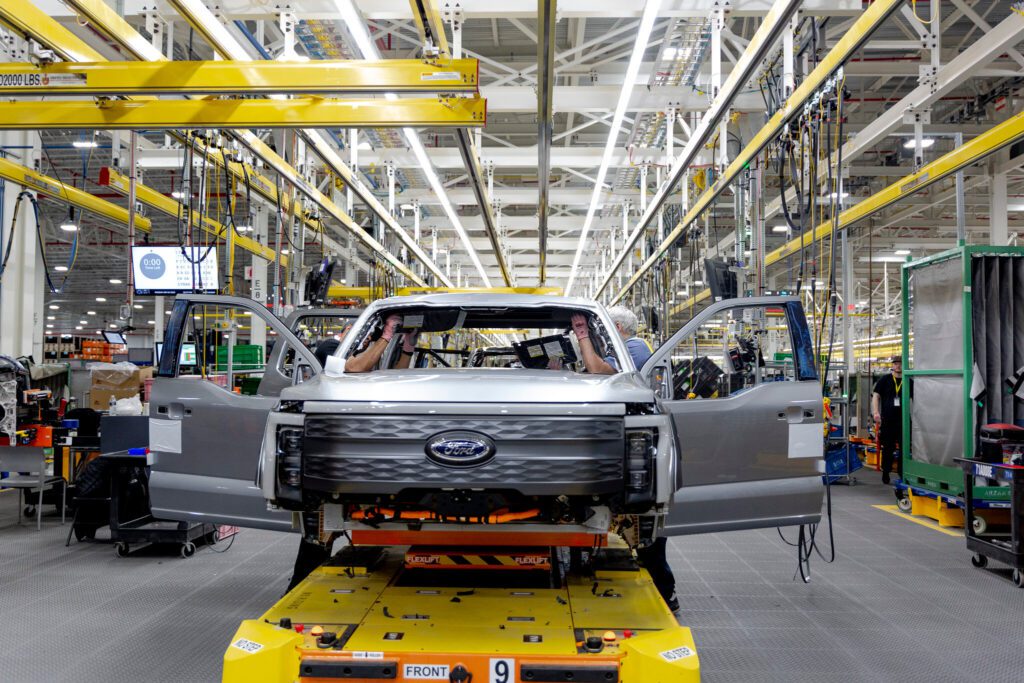
Ačkoli výsledky za druhé čtvrtletí byly pozitivní, výhled pro zbytek roku není bez výhrad. Očekává se, že prodej automobilů ve Spojených státech začne v druhé polovině roku 2025 klesat. Jedním z hlavních důvodů jsou nová celní opatření, která mají přímý dopad zejména na segment elektromobilů.
Například model Ford Mustang Mach-E, vyráběný v Mexiku, podléhá clům a jeho cena se v květnu zvýšila. To mělo okamžitý dopad – prodej tohoto vozu klesl o 20 %. Ještě větší pokles byl zaznamenán u modelů F-150 Lightning a E-Transit, jejichž prodeje se propadly o 26 %, respektive o 88 %. Tato čísla naznačují, jak silně může celní politika ovlivnit prodeje vozidel, zejména těch, která nejsou vyráběna přímo na území USA.
Přesto Ford nerezignuje a snaží se zákazníky oslovit novou pobídkovou strategií, která by měla oslabující tržní sílu částečně vyvážit.
Do třetího čtvrtletí vstupuje Ford s novou marketingovou iniciativou, která má potenciál udržet zájem zákazníků navzdory zhoršujícím se podmínkám. Nabízí bezúročné financování na 48 měsíců, bez nutnosti akontace a se zpožděním prvních splátek o 90 dnů. Tato akce se vztahuje na většinu modelů značek Ford a Lincoln a platí do 2. září.
Tento krok vychází z přesvědčení, že spotřebitelé čelí zvýšeným nákladům i v jiných oblastech života – například u hypoték kvůli vyšším úrokovým sazbám. Ford věří, že snížení vstupní bariéry při nákupu vozu může být přesně to, co potenciální zákazníci hledají.
Existuje však jedno důležité omezení, které je nutné zmínit – pobídka se nevztahuje na některé populární modely. Ze seznamu jsou vyloučeny například Bronco Sport, Expedition, Maverick, Ranger, Transit, Super Duty a Lincoln Navigator z roku 2025, a rovněž Maverick, Ranger, Transit, Super Duty, F-150 Lightning a Mustang Mach-E z roku 2024. Také výkonné verze Raptor nejsou do akce zahrnuty.
Z pohledu investorů má tato nová strategie dva základní rozměry. Na jedné straně je to pozitivní signál, že společnost aktivně reaguje na změny v prostředí a snaží se chránit svůj tržní podíl i v náročnějších podmínkách. Navazuje tak na úspěšnou předchozí kampaň, která nejenže zvýšila prodej, ale i upevnila vztahy mezi automobilkou a její sítí prodejců.
Na druhé straně existuje i potenciální riziko spojené s příliš štědrými pobídkami. Pokud by byly používány bez rozmyslu, mohly by negativně ovlivnit ziskovost společnosti. V současné chvíli ale nejsou žádné náznaky, že by Ford postupoval neuváženě – a proto není důvod k panice.
Investoři by tak měli vnímat tuto iniciativu jako další krok v rámci snahy společnosti přizpůsobit se turbulentnímu trhu. Přestože akcie automobilky Ford zatím nezaznamenaly výraznější úspěch na Wall Street, tyto kroky ukazují, že firma má jasnou strategii a není pasivní vůči makroekonomickým výzvám.
Ve světle současného vývoje je tedy nová pobídková kampaň sice jen „malou dobrou zprávou“, ale stále důležitým krokem správným směrem. Pokud Ford dokáže skloubit atraktivní marketing s finanční odpovědností, může tím posílit důvěru investorů a připravit si půdu pro budoucí růst.

See also: InstaForex trading indicators for GBP/USD
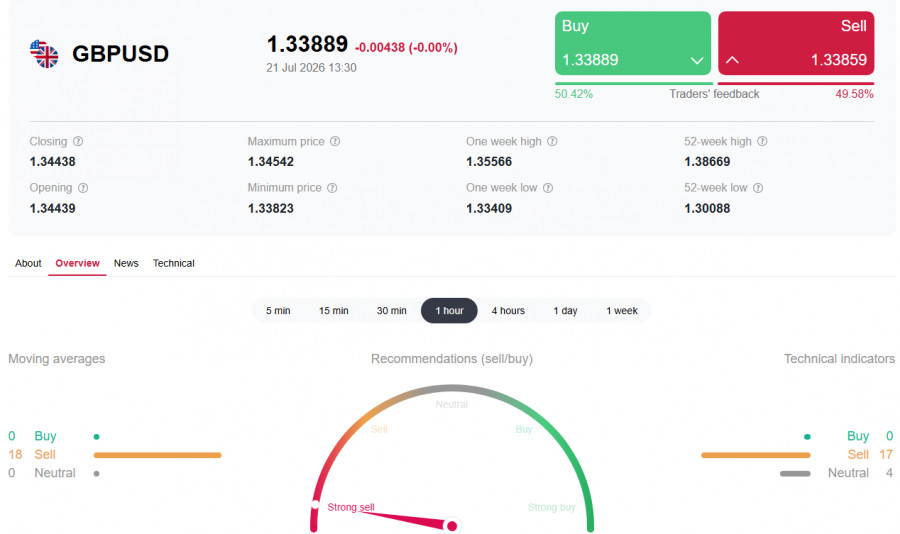
At the start of the US session on Tuesday, GBP/USD was consolidating near the key support at 1.3400 after three consecutive sessions of decline. The pound is under pressure from several factors at once: a change in political leadership in the UK, rising questions about the new government's fiscal policy, and continued geopolitical tension in the Middle East.
The pair has retreated from recent highs near 1.3550, and the market is pricing in the consequences of political change in the UK and macroeconomic releases.
The key driver of pressure on the pound has been political uncertainty. Andy Burnham has officially become the seventh UK prime minister in the past decade. Although the new prime minister has reaffirmed a commitment to fiscal rules, his remarks about having "flexibility" to meet measures to ease the cost of living have worried the government bond market. Investors fear that a growing list of spending commitments could lead to higher government borrowing.
Fundamental backdrop: political uncertainty and labor market data
Political uncertainty is weighing on the pound. John Hilli's appointment as chancellor was initially received positively by markets, but subsequent signals of flexibility in budget policy have unsettled investors. The UK government bond yield premium over German Bunds trades near the highs seen during the Truss crisis in September 2022, at about 140 basis points. The budget deficit for April–June of £2.7 billion exceeded Office for Budget Responsibility forecasts due to an overspend of £3.6 billion.
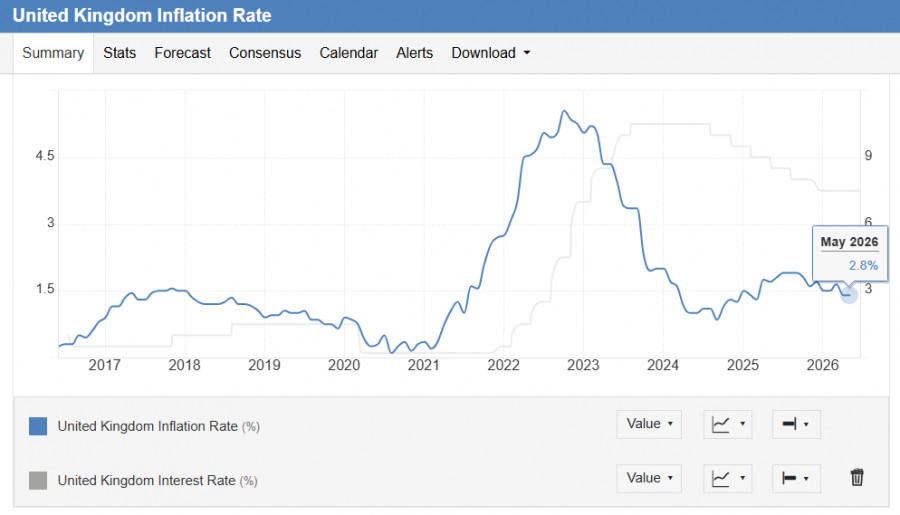
Labor market data beat expectations but eased inflationary pressure. As shown by the data published this morning, the ILO unemployment rate for the three months to May remained at 4.9% versus expectations of a rise to 5.0%. New claimant count increases in June amounted to 6.7k, well below May's 31.2k. However, wage growth slowed more than expected: private sector pay growth fell to 2.9% year-on-year, the weakest reading since October 2020. That points to easing inflationary pressure and offsets the positive effect of a stable unemployment rate.
Geopolitical factor. Escalation of the US–Iran conflict and Houthi threats in the Red Sea keep oil prices elevated, which heightens inflationary pressure and supports expectations of sustained high rates. That exerts additional pressure on the pound because the UK is a net energy importer.
Brief technical analysis
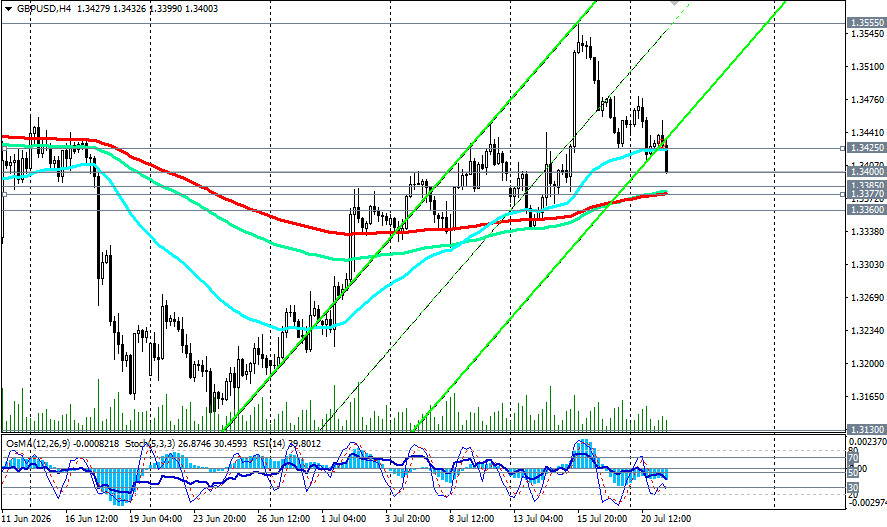
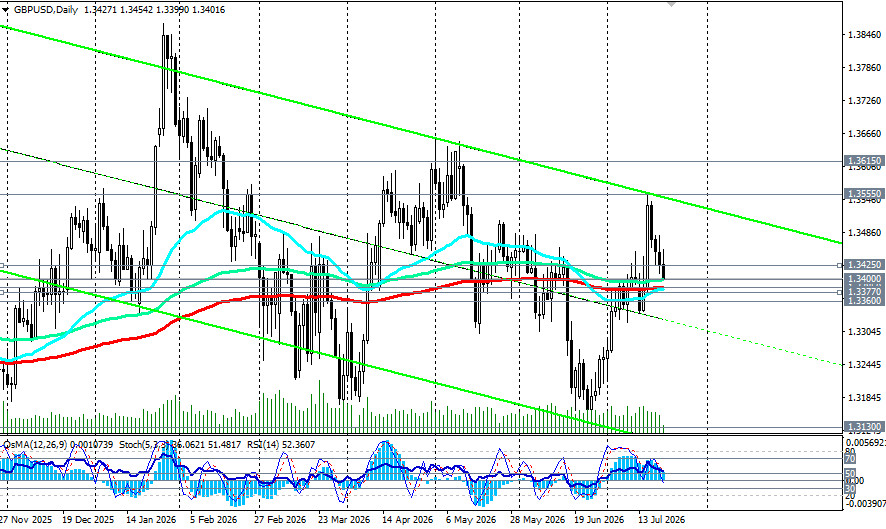
Technically, GBP/USD retains a short-term bearish tilt, while the medium-term trend remains upward. On the daily chart price is testing the 144-day EMA and the round level at 1.3400 and sits above a strong support zone at 1.3380–1.3385 (EMA50 and EMA200). The position of the rising EMA200 on the 4-hour chart (1.3377) below the price also confirms a bullish structure.
The most likely path is volatile consolidation in the 1.3370–1.3460 range with a retained risk of declines if fiscal concerns deepen or inflation data disappoint.
Key events to watch this week
| Date | Event | Forecast | Possible influence on GBP/USD |
| 22 July | UK CPI (June) | 2.7% y/y, 0.1% m/m | Above forecast = support for GBP (hawkish BoE); below = pressure |
| 24 July | UK RPI (June) | Indirect ibnfluence via inflation expectations | |
| 22 July | UK PPI (June) | — | additional indicator of inflationary pressure |
| 24 July | US existing home sales (June) | 5.50 million | Strong data = support for USD; weak = support for GBP |
| 24 July | Preliminary PMI for the UK, euro area, and US (July) | Signals on economic conditions | Strong readings = support for respective national currencies |
| 23 July | Eurozone consumer confidence (July) | — | Indirect influence via EUR and cross rates. |
| 24 July | University of Michigan consumer sentiment (final). | Confirmation of preliminary data | Affects expectations on consumer spending and inflation. |
| 29 July | BoE meeting | Rate unchanged at 3.75% | Dovish signals = pressure on GBP; hawkish = support |
Key points to monitor
UK inflation (July 22). This is the week's main event for GBP. If CPI comes in above forecasts (2.7%+), that will strengthen expectations of BoE tightening and support the pound. If inflation slows more than expected, GBP/USD could fall toward 1.3370 and lower.
Fiscal policy of the new government. Markets will watch closely for any statements from new Prime Minister Andy Burnham and Chancellor John Hilli on budget policy. Signs of increased spending could pressure the pound, while confirmation of a commitment to fiscal discipline would support the currency.
Geopolitical situation. The evolution of the US–Iran conflict and Houthi threats in the Red Sea will continue to affect oil prices and risk appetite, exerting an indirect influence on GBP/USD.
Preliminary PMIs (July 24). These indicators will provide a read on economic conditions in the UK, euro area, and US in July. Strong UK data will support the pound, while weak US data will weaken the dollar and support the pair.
Conclusion and recommendations for investors
GBP/USD is in a decisive phase where a bullish impulse from a stable labor market and expectations of a hawkish Bank of England collide with bearish pressure from political uncertainty and geopolitical risks. The key level, 1.3385, remains the main watershed for short-term dynamics. This week market attention will focus on UK inflation data, which may provide a fresh impulse for the pair.
For short-term traders: short positions amid a break below 1.3385 with targets at 1.3360–1.3320. Consider longs only on a close above 1.3460 confirmed by fundamentals.
For medium-term investors: adopt a wait-and-see stance until fiscal policy and inflation data become clearer. A correction to 1.3320–1.3360 may be used to enter longs if the BoE's hawkish stance endures.
Risk management: Remain cautious given high volatility associated with political events and macro releases. Observe strict stop-loss discipline and monitor developments in the UK and comments from Bank of England officials.
ForexMart is authorized and regulated in various jurisdictions.
(Reg No.23071, IBC 2015) with a registered office at First Floor, SVG Teachers Co-operative Credit Union Limited Uptown Building, Corner of James and Middle Street, Kingstown, Saint Vincent and the Grenadines
Restricted Regions: the United States of America, North Korea, Sudan, Syria and some other regions.










 コンタクトする