Londýn – Nejznámější kryptoměna bitcoin poprvé překonala hranici 120.000 USD a stanovila nový rekord 121.207,55 USD (2,56 milionu Kč), uvedl Reuters. Americká Sněmovna reprezentantů dnes bude projednávat několik návrhů zákonů, které mají digitálním měnám dodat legislativní rámec, o který jejich zastánci dlouhodobě usilovali.
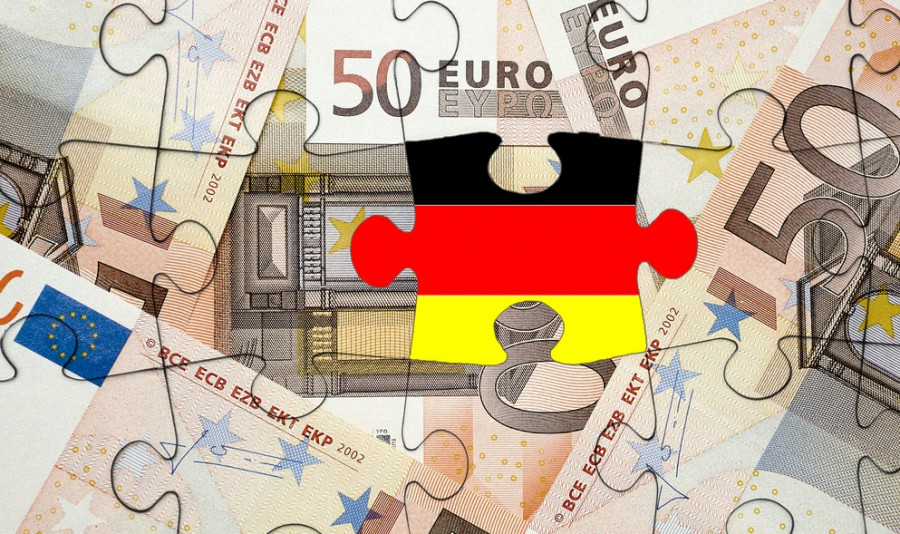
The July ZEW indices published today came in significantly stronger than expected, with nearly every component surpassing consensus forecasts, making the release one of the most encouraging macroeconomic signals for the Eurozone in recent months.
That said, the market's muted reaction to the report should not diminish its importance. Market participants are currently in a wait-and-see mode, reluctant to open sizable EUR/USD positions amid continued uncertainty surrounding the conflict in the Middle East. As a result, geopolitical developments have overshadowed the ZEW survey for now. Nevertheless, these indicators are likely to regain the market's attention, especially if this week's PMI data also comes in stronger than expected.
According to the published figures, Germany's ZEW Economic Sentiment Index jumped to 26.3 in July, well above the forecast of 18.0, from 10.5 in June. This is the highest reading since February. Moreover, the index has now risen for three consecutive months, marking a clear upward trend (for comparison, it stood at -17.2 in April).
Germany's ZEW Current Situation Index improved to -77.6, compared with -81.0 in June. This marks the first improvement in the indicator over the past three months.
Meanwhile, the Eurozone ZEW Economic Sentiment Index rose to 23.4, following a modest increase to 9.5 in June. Most analysts had expected a much smaller improvement, to 11.2.
An increase of more than 15 points in the expectations index within a single month is a highly unusual development. It suggests that institutional investors and financial analysts have become considerably more optimistic about the economic outlook for the next six months.
This naturally raises the question: why did the index improve so sharply in July?
In my view, there are two main reasons behind the stronger business sentiment.
First, respondents reacted positively to the German government's economic package. This includes tax incentives, labor market reforms, pension reforms, and measures aimed at reducing the bureaucratic burden on businesses. Together, these initiatives have strengthened expectations of faster economic growth during the second half of the year.
Second, the German economy is already showing early signs of recovery. Recent economic data indicated an improvement in industrial production (+0.9%), an increase in factory orders (+1.2%), and stronger retail sales (+4.3%). The continued improvement in the headline ZEW index suggests that investors increasingly view these developments not as isolated fluctuations but as the beginning of a more sustainable recovery.
Furthermore, despite ongoing tensions surrounding Iran and persistently high oil prices, respondents to the ZEW survey do not consider the current geopolitical situation sufficient reason to revise their medium-term outlook for Germany's economic recovery. This view also helps explain the resilience of EUR/USD buyers. Despite the escalation of tensions between the United States and Iran, the pair has continued to hold within the 1.14 price level, reflecting traders' belief that the current escalation is temporary rather than structural.
As mentioned earlier, the Current Situation Index remains deeply negative. However, it also improved, rising from -81.0—its weakest reading since December 2025—to -77.6.
Taken together, the ZEW indices suggest that investors still view Germany's current economic conditions as weak while remaining confident that the economy will gradually recover over the next six months. Such a combination of signals is, in fact, fairly typical during the early stages of an economic turnaround.
Overall, the July ZEW survey provides an important signal that investor sentiment is improving. However, by itself, it is unlikely to have a significant impact on the European Central Bank's policy stance. The report will become much more meaningful if this week's German and Eurozone PMI figures also show solid improvement, particularly if the services sector returns to expansion territory after spending three consecutive months below the 50-point threshold. In that case, the strong ZEW results would be viewed as an early indicator of a genuine recovery in business activity. If, on the other hand, the PMI figures disappoint, the optimism reflected in the ZEW survey will remain unconfirmed and may prove premature.
Therefore, the current picture primarily reflects improving sentiment rather than a fundamental shift in the economic outlook. The Current Situation Index remains deeply negative, meaning that stronger hard data—such as PMI readings, GDP growth, and industrial production figures—will still be needed to confirm that a sustainable recovery has begun.
This also partly explains the restrained reaction of EUR/USD traders to today's report. For now, the ZEW survey should be viewed more as an early indication of a future recovery than as definitive confirmation that economic conditions in the Eurozone have materially improved.
In addition, today's market attention remains focused almost entirely on developments in the conflict between the United States and Iran following an Axios report that mediators have proposed a 10-day ceasefire, during which diplomatic negotiations would resume.
At this stage, neither Washington nor Tehran has confirmed or denied the report. As a result, uncertainty remains elevated, and EUR/USD continues to fluctuate within the 1.1410–1.1470 level, alternating between short-term advances and declines without establishing a sustained directional trend.
ForexMart is authorized and regulated in various jurisdictions.
(Reg No.23071, IBC 2015) with a registered office at First Floor, SVG Teachers Co-operative Credit Union Limited Uptown Building, Corner of James and Middle Street, Kingstown, Saint Vincent and the Grenadines
Restricted Regions: the United States of America, North Korea, Sudan, Syria and some other regions.







 コンタクトする