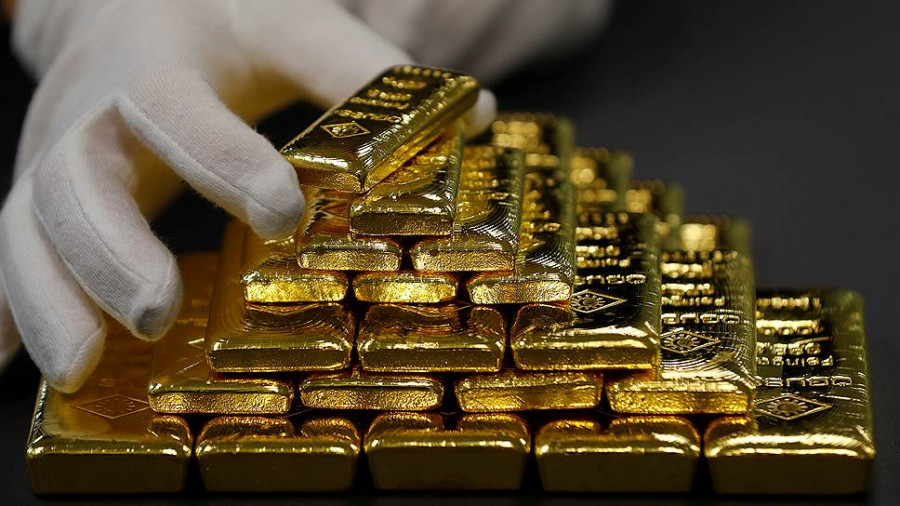
Gold stabilized around $4,320 after an attempt to rise late last week. Silver fell 0.5 percent to $64.19, while platinum and palladium were nearly unchanged.
The pressure came from the August inflation report, which turned out hotter than expected. The core consumer price index excluding food and energy rose 0.3 percent month-on-month, and traders now price in almost a 90 percent chance of a Federal Reserve rate hike on Wednesday. This would be the first tightening in three years.
The political dimension of this decision makes it special. Any hike risks drawing the wrath of President Trump, who on Sunday again called for rate cuts. Kevin Warsh finds himself on a collision course with the White House at precisely the moment when midterm elections are six weeks away and gasoline and diesel prices are setting records.
It seems to me the market has largely priced in the risk of a rate increase, yet the metal would still face additional pressure if it occurs. Conversely, a pause would push real yields down and rekindle concerns about policy credibility and currency debasement, which should support gold. A pause is now better for gold not because of the rate channel but because of the institutional angle. If the Fed refrains from acting despite core inflation accelerating to 0.3 percent month-on-month, the market will read that as evidence of political pressure, and the debasement narrative will return with force. In that scenario, metal holders win and trust in the central bank's independence loses.
The medium-term picture remains favorable for the metal under either outcome. Tightening would add stress to parts of the economy already squeezed by higher energy costs and could widen the path to a recession — a positive for gold.
The energy backdrop continues to fuel inflation while also capping the metal. Brent rose to $107 per barrel after gaining nearly 9 percent last week. A planned Monday meeting between Iran and several Gulf states to create a temporary shipping corridor through the Strait of Hormuz was postponed, leaving export efforts via the critical waterway in limbo.
I expect the Fed will still hike on Wednesday, and gold's first reaction will be negative, sliding toward $4,250–4,300. I believe that decline will be short-lived because the decision, despite public pressure from the president, would be the strongest confirmation in a long time of the Fed's independence, and the market will then refocus on the economic consequences with ten-year yields near 5 percent.
I do not rule out a scenario in which the committee pauses, in which case the metal would spike upward immediately. The risk to both forecasts lies in Warsh's rhetoric: if he signals the start of a full cycle rather than a one-off move, gold's decline will be deeper and more prolonged than expected.
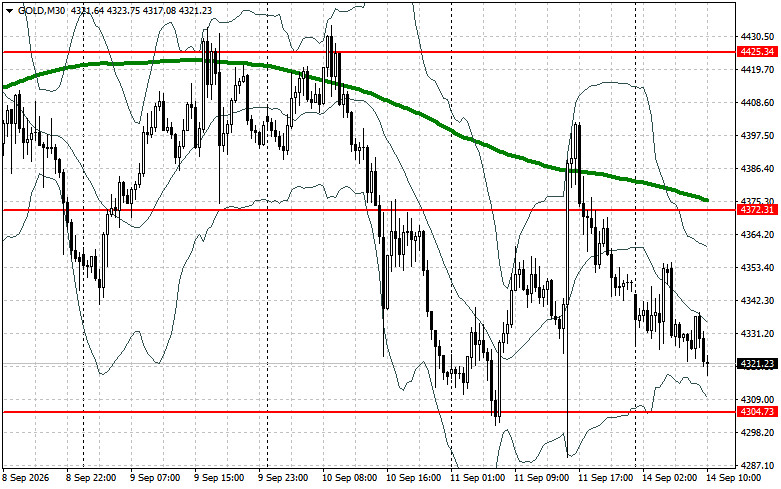
As for the current technical picture, buyers need to take the nearest resistance at $4,372. That would allow a target of $4,425, above which a breakout will be difficult. The farthest target is the $4,480 area. If it drops, bears will try to seize control of $4,304. If they succeed, a range breakout will deliver a serious blow to bulls' positions and push Gold toward the $4,249 low, with a prospect of extending to $4,200.
ForexMart is authorized and regulated in various jurisdictions.
(Reg No.23071, IBC 2015) with a registered office at First Floor, SVG Teachers Co-operative Credit Union Limited Uptown Building, Corner of James and Middle Street, Kingstown, Saint Vincent and the Grenadines
Restricted Regions: the United States of America, North Korea, Sudan, Syria and some other regions.










 コンタクトする