The Middle East crisis and diplomatic maneuvers around Iran have turned oil into a roller coaster and stripped gold of some of its safe-haven appeal amid renewed inflation worries

The Middle East crisis and diplomatic maneuvers around Iran have turned oil into a roller coaster and stripped gold of some of its safe-haven appeal amid renewed inflation worries and hawkish Fed rhetoric.
While commodities gyrate, the tech sector faces its own drama: unbounded investor appetite for artificial intelligence is colliding with harsh geopolitical realities. As AMD reports record revenue, US pressure has torpedoed multibillion-dollar deals, such as the Oracle-Tencent agreement, raising new barriers to global tech cooperation.
In this article, we examine how the mix of military threats, macro factors, and a de-facto global AI blockade is shaping markets today and where every diplomatic headline creates trading opportunities.

In the early session on November 3, oil futures rocketed on Middle Eastern headlines and then plunged as diplomatic signals shifted. The episode illustrates how "black gold" now moves more on headlines than on physical output.
In Asian and early European trade, Brent and WTI initially climbed by more than $1/bbl after reports that the United States struck Iran's Qeshm Island. Traders reacted to the strike, remembering Monday's earlier 7% collapse and Iranian statements that "a peaceful deal is still far away."
Washington was quick to cool the rhetoric. US officials described the Qeshm strikes as "limited and defensive," saying they were a response to an attack on an American aircraft and that they did not signal a return to wide-scale hostilities.
As The New York Times notes, these covert operations were the first US strikes on Iranian targets since September, with The Wall Street Journal first reporting the attack.
But the oil euphoria was short-lived. The market reversed almost instantly after Arab media circulated a sensational report that Doha had secured a draft memorandum of understanding to present to Tehran — and that both sides had made reciprocal concessions.
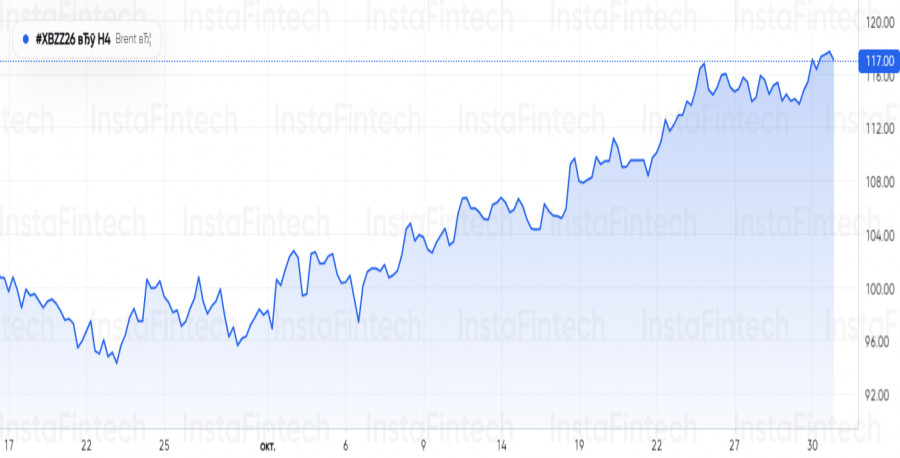
Markets reacted to the prospect of diplomacy. Quantum Commodity Intelligence observed Brent "sharply give back morning gains," while US equity futures moved higher.
No government has officially confirmed the memo. Qatar's foreign ministry spokesman Majed Al-Ansari said only that the parties are studying Doha's proposal and that mediators continue to relay positions between Tehran and Washington in real time.
These headline-driven swings show a new reality: oil prices now behave like a political talk show, moving on every diplomatic line. Beneath the fanfare, however, physical flows from Gulf exporters are quietly and steadily recovering.
For traders, these news storms are not just stress — they are an opportunity to earn. The futures and instruments discussed in this note, including Brent and WTI contracts, are available on the InstaForex platform.
Want to trade these waves? Open an InstaForex account today and download the mobile app to stay on top of global developments and execute trades anywhere.
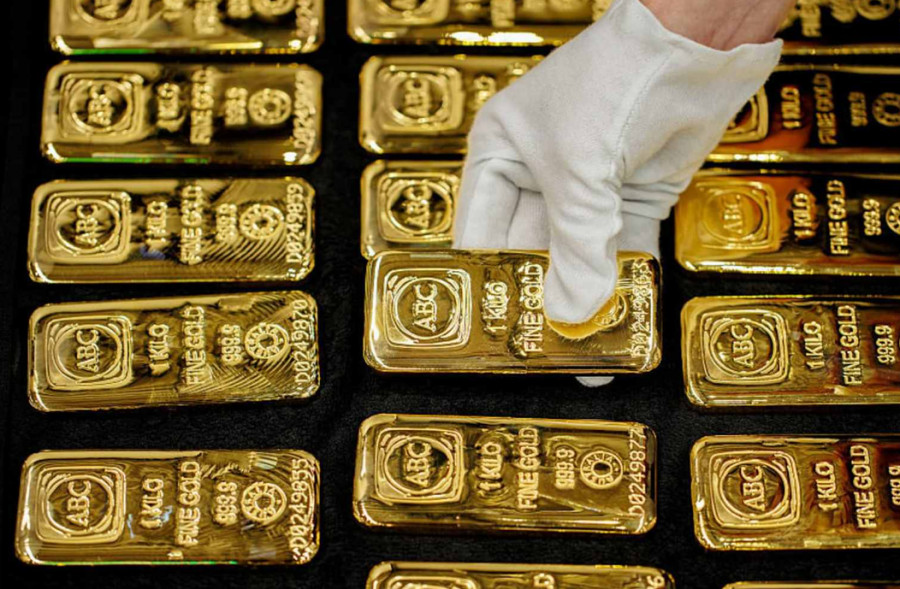
While the US was absorbed by midterms, global precious metals markets were in turmoil. Gold and silver appeared to find a floor early in the week, but by Tuesday, November 3, they had given back much of Monday's bounce. Investors face a triple whammy: geopolitical shocks, a tech-stock collapse tied to AI, and the prospect of further Fed tightening.
Early in the week, there was a glimmer of hope. On Monday, November 2, gold jumped by 2% off a yearly low reached the prior Friday, helped by a sharp drop in oil after comments by Iranian President Masoud Pezeshkian that Tehran had been granted expanded authority to pursue peace talks. Inflation worries eased momentarily, giving the metal a chance to breathe.
However, the euphoria was short-lived. On Tuesday, reports of US strikes on Iran's Qeshm Island in the Strait of Hormuz roiled markets again. Oil rapidly retraced its losses, and inflationary fears returned.
As a result, by mid-Tuesday, December gold futures were down about 0.6%, failing to hold above the psychological $4,000/oz level that the metal lost in weak October trading. Silver was hit even harder: it plunged by 4% in the European session and was still down about 1.8% by midday in New York.
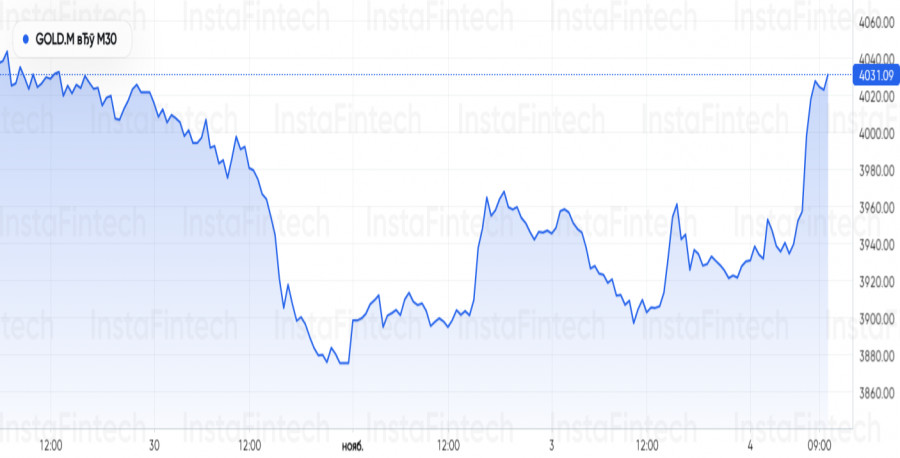
Oil's rebound instantly reignited inflation fears. According to Nilesh Shah, commodity strategist at WisdomTree, the rise in oil prices increases inflation pressure. That means the Fed is less likely to back off its interest rate hikes, which is very negative for gold, the expert sums up.
The market no longer trusts an easy path for policy: CME FedWatch shows traders price in about a 75% chance of a December rate hike. All eyes now turn to the US payrolls report on Friday, November 6, which could prove decisive.
However, there is also a more cynical driver of gold's fall. The sell-off in AI-linked equities triggered a wave of margin calls. Investors were forced to sell highly liquid holdings to cover losses elsewhere — and gold has served as one of those go-to liquidity buffers rather than a pure safe haven. Evidence of that is clear: gold fell by 6.8% in October alone.
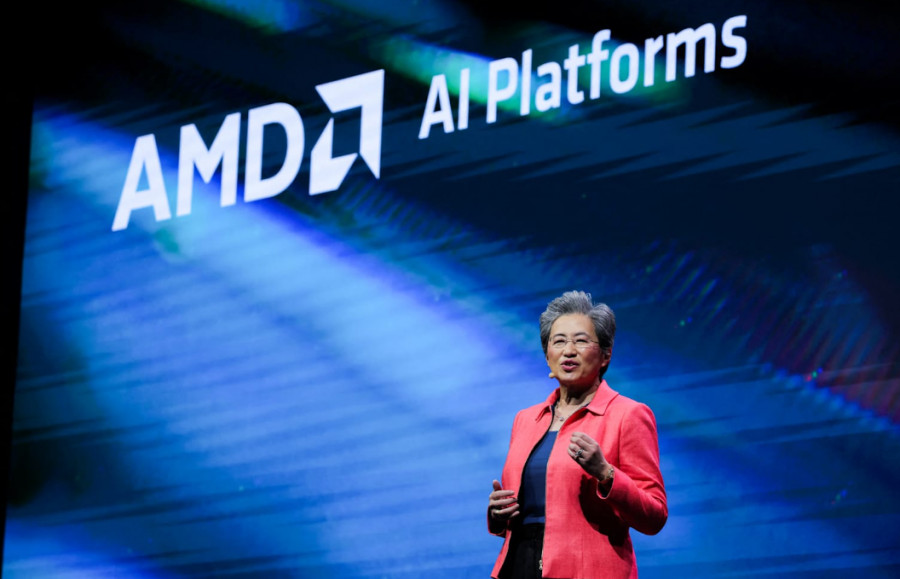
Not so long ago, AI chips meant one name — Nvidia. Now, a clear second protagonist has emerged, and it is not content to play a supporting role. On Tuesday, November 3, Advanced Micro Devices made it clear that demand for its products is not merely holding up — it is accelerating.
AMD expects Q4 revenue of roughly $17 billion, plus or minus 3%. LSEG-surveyed analysts had modeled about $16.23 billion on average, Reuters notes, while the Bloomberg consensus was about $16.3 billion — both figures that AMD comfortably eclipsed with its guidance. Reuters called the outlook a clear signal that market appetite for data-center processors remains robust.
The stock reaction was immediate. AMD jumped by more than 6% in after-hours trading. And this is not a one-off emotional spike: the shares have more than doubled year-to-date, rewarding investors who bought into the AMD story a year ago.
Q3 results help explain the enthusiasm. Revenue rose by 45% to $13.38 billion vs. $13.09 billion expected. Adjusted EPS came in at $2.09 vs. $1.95 consensus.
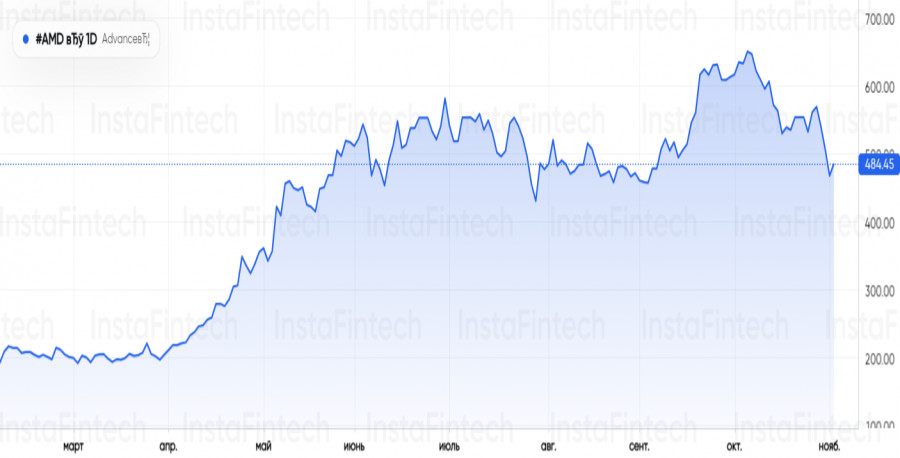
But the real story is server sales. Data-center revenue almost doubled, up 97% to a record $8.55 billion, beating analysts' $8.20 billion forecast. The AI accelerator battle is being fought in hyperscaler server racks, and AMD is staking out a place in the sun.
Not every segment is booming. Client and gaming revenue fell by 8% to $3.72 billion, missing estimates. While AI is powering growth, the traditional consumer market is clearly cooling.
There is a second warning: AMD now anticipates adjusted gross margins near 55% in Q4 versus 56% in Q3, slightly below analyst expectations, according to Reuters. Revenue growth alone does not guarantee rising efficiency.
A separate industry headache is a global shortage of high-bandwidth memory (HBM), the component modern AI processors need to perform. You can design the most powerful accelerator, but without scarce memory, you cannot build enough units.
In other words, AMD is riding a tailwind of demand but faces headwinds from costs and supply constraints. Whether the company can sustain this momentum will be revealed in the Q4 report. For now, the market votes with purchases.
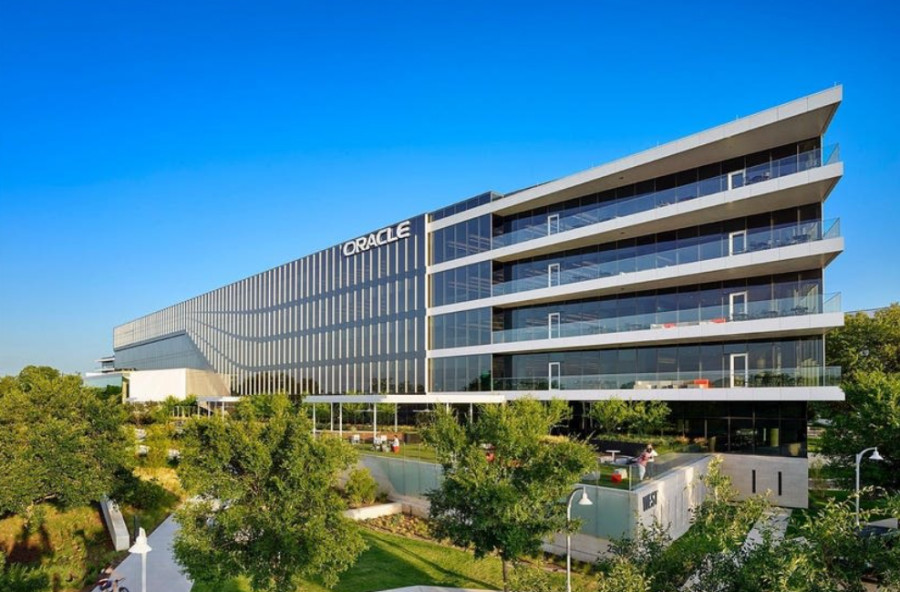
The global AI arms race has entered a tougher phase. Financial Times reported on November 4 that Oracle canceled a large lease agreement to provide advanced AI chips to China's Tencent.
The aborted deal was worth roughly $7 billion. According to FT, the reversal followed direct pressure from the Trump administration — a sign of "rising pressure on US firms building AI infrastructure and partnering with Chinese tech leaders." Reuters quickly picked up FT's report as breaking news, although neither Oracle nor Tencent has publicly confirmed the cancellation or even the existence of the original agreement.
The cancellation closes one of the largest known channels through which Chinese firms could access advanced US chips, direct imports of which are already tightly restricted. Notably, the move came a day after reports of tightened rules governing Nvidia's partnerships with Chinese clients.
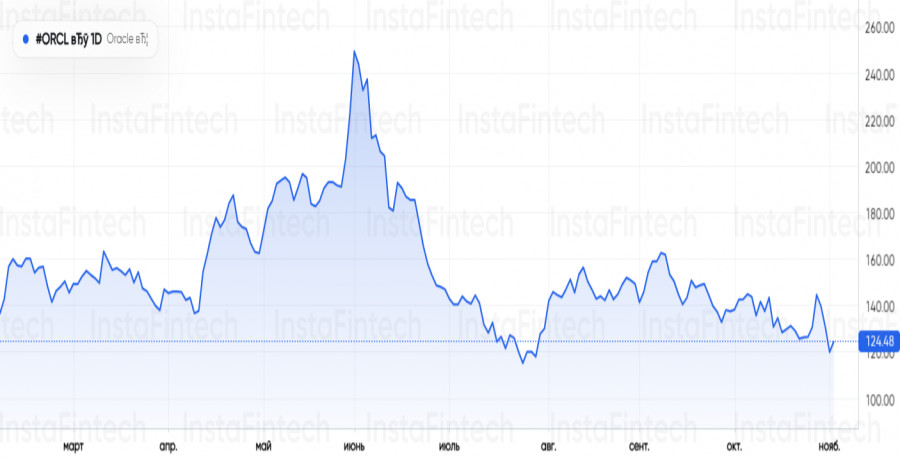
FT first reported the arrangement on September 30. It described a five-year lease that would have been the largest overseas deal of its kind in Tencent's history.
The plan would have given Tencent access to roughly 100,000 state-of-the-art AI chips housed in Oracle data centers across Southeast Asia, regions where such capacity does not exist within China itself. Reuters reports that Tencent was prepared to put down about 30% of the $7 billion as an upfront payment.
Legally, the scheme had appeared sound: US export controls target physical chip shipments, while renting computing capacity was a gray area and a convenient workaround, as Tom's Hardware observed.
But that loophole appears to be closing. The US Commerce Department is reportedly preparing rules that would explicitly forbid Chinese companies from leasing compute capacity in third countries, cutting off that alternative route to advanced US compute.

QUICK LINKS
ForexMart is authorized and regulated in various jurisdictions.
(Reg No.23071, IBC 2015) with a registered office at First Floor, SVG Teachers Co-operative Credit Union Limited Uptown Building, Corner of James and Middle Street, Kingstown, Saint Vincent and the Grenadines
Restricted Regions: the United States of America, North Korea, Sudan, Syria and some other regions.







 Contact Us